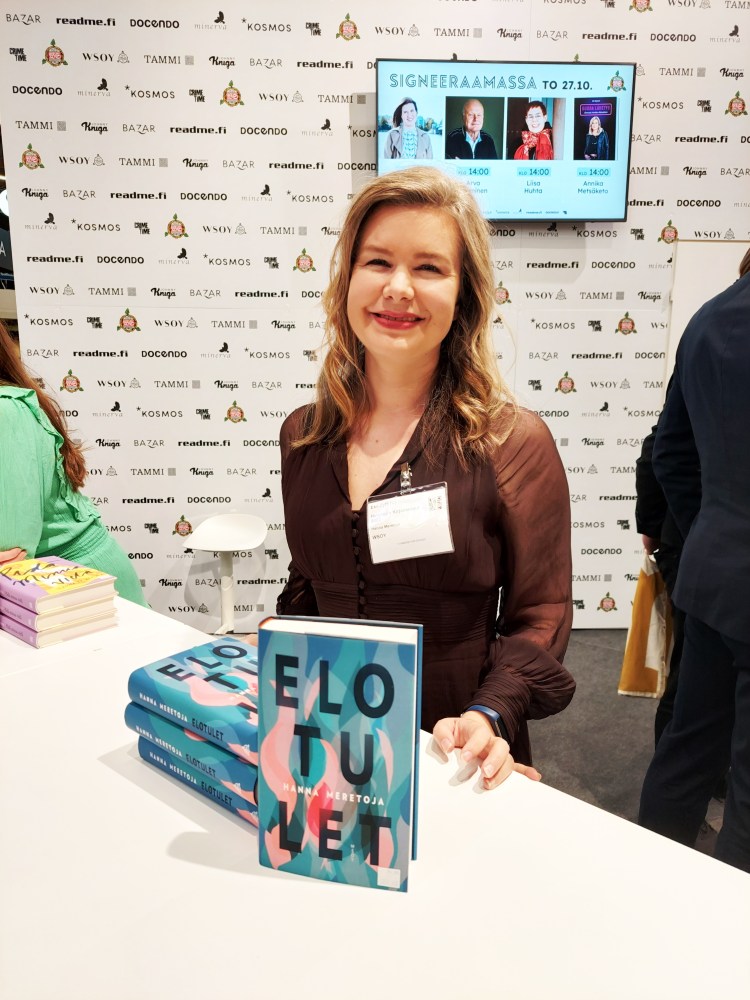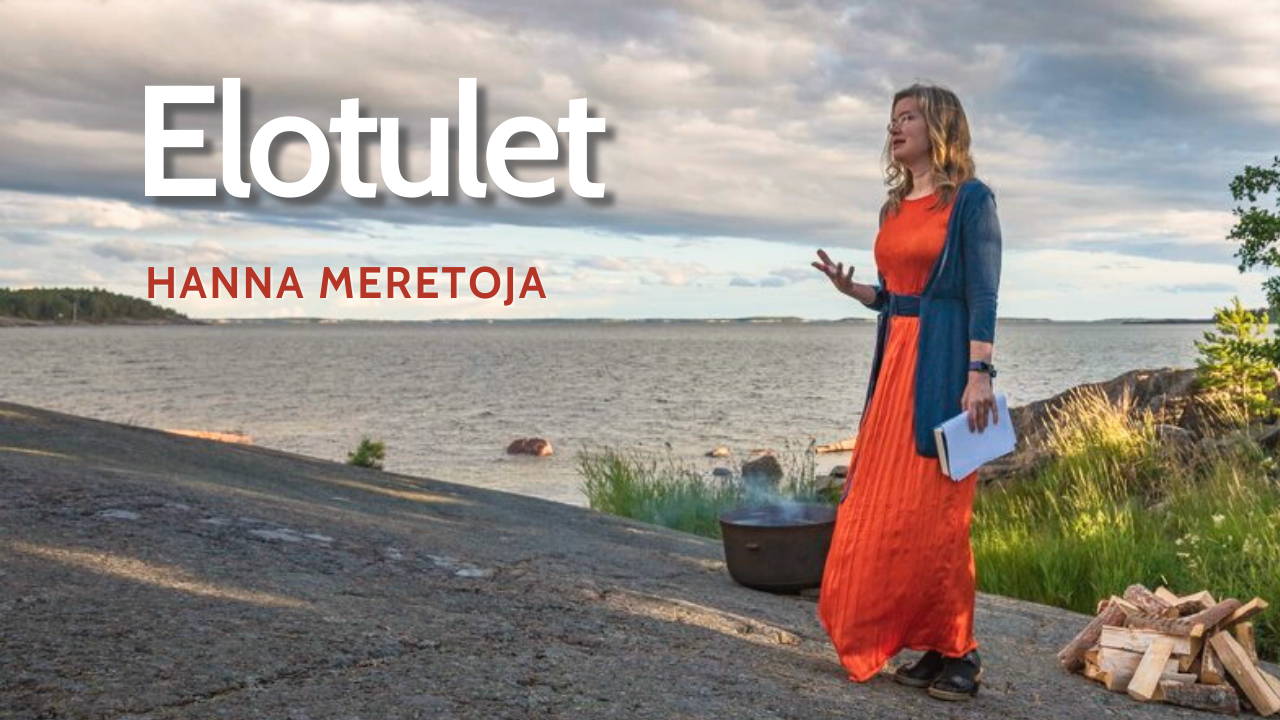
Close friends come together on the Night of Ancient Lights to watch the chain of bonfires blaze across the archipelago and talk through their pasts and futures.
Elea has just heard that she is seriously ill and wants to share with friends the sense of urgency that shakes her to her core. The push-and-pull of hope and despair permeates the narration that flows in the rhythm of the sea, in dialogue with Virginia Woolf’s Waves and Tove Jansson’s Summer Book. It captures the soul of the Finnish archipelago – the world’s largest island labyrinth.
Intellectual force is braided with subtle drama as personal emergency is woven into the fabric of global crises: the pandemic and climate change. Time is disrupted, but illuminated moments gleam in the dark. This intellectually fierce and passionate one-evening novel threads philosophical reflections into deeply intimate perceptions in a way that readers of Rachel Cusk and Maggie Nelson will recognize.
(Description of the novel by Elina Ahlbäck Literary Agency)
About Elotulet
Many of Meretoja’s scholarly interests are woven into the fabric of the novel. Much of her research revolves around the friction between life and narrative, the philosophical underpinnings of literature, the narrativization of illness and trauma, and the role of water in literature. These themes are integral to the novel, in which cultural theory and philosophy are entangled with an acute sense of lived experience. Meretoja was diagnosed with breast cancer in 2019. Her own experience of illness is one important starting-point of the novel, in which she explores – through the means of literary fiction – the existential crisis brought about by serious illness.
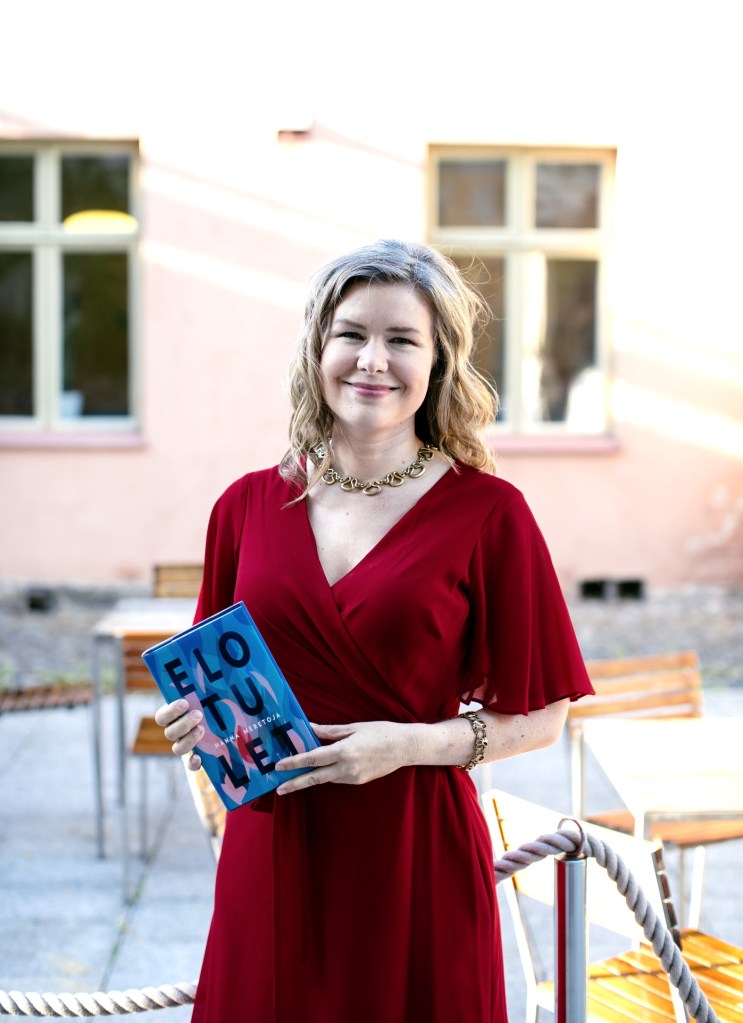
Meretoja was born in Kaarina, lives in Turku, and has spent her summers ever since her childhood in the archipelago of Parainen, where bonfires have been lit throughout centuries. In the novel, the fires are linked to the ephemeral nature of life. They bring together the three dimensions of time: they are a way of remembering the past, they burn fiercely in the here and now, and they warn of the future. At the heart of the existential crisis conveyed by the ruptured narration of Elotulet is a waking up from an illusion of control to the fundamental randomness of life – to a fragile sense of hope and joy that emerges from the experience of being held by others and of being fundamentally connected to the cycle of water that binds together all living beings.
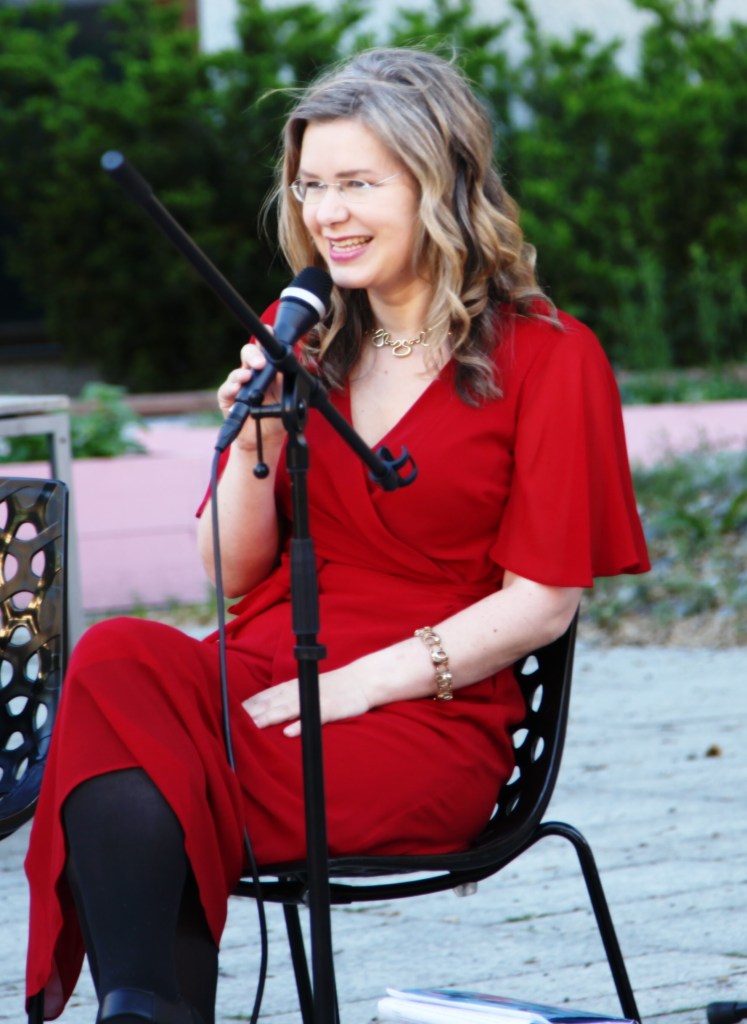
(Photo by Jaska Poikonen)
“The sea opens before Elea, thick with stories, but she doesn’t know if any of them can help her now. It glimmers calmly in the sun, but can still surge and wrap up its skirts at any moment. Tonight, a string of lights will come on by the black water. Beacons have always been lit in these parts. Seafarers have needed guide lights to find their way ashore and to avoid underwater rocks. The inhabitants of the archipelago have lit fires to warn one another and to keep in contact. On the night of ancient lights, the last Saturday of August, the people of the archipelago reminisce about the chain of fires reaching back through the centuries. The festival of fire, water, and light concludes the summer and prepares people for the dark.”
Reviews of Elotulet
The novel has received glowing reviews – it has been praised for its lyrical language, wisdom and boldness, complex philosophical reflections on life and death, love and friendship, nature and our place in the cycle of water.
Media
Interviews and talks linked to Elotulet:
- “Narrative Agency, Life Writing, and the Experience of Illness”, 5 May 2020, The Oxford Research Centre in the Humanities
- Astrid Swan & Hanna Meretoja: “D/other”, 18 August 2021, Aboagora, Turku
- “Elämänhallinta on pelkkä illuusio” (Marianne Riiali, Helsingin Sanomat, 4 May 2021)
- Radio Helsinki (Laura Friman) 2022
- “Turun yliopiston professori sai syöpädiagnoosin ja päätti käsitellä hädän kokemusta kirjoittamalla romaanin” (Tuomo Karhu, Turun Sanomat, 27 May 2022)
- “Elden som förstör och förlöser” Interview with Hanna Meretoja and Astrid Swan (Sanna-Maria Sarelius, Inblick Magazine, 1 November 2021)